


A student team from Zhengzhou University (ZZU), averaging just 22 years of age, won a gold medal at the 2025 China International College Students' Innovation Competition. For their project, entitled "intelligent pregnancy", they developed a piece of multi-dimensional embryo screening technology aimed at improving the success rates of assisted reproduction.
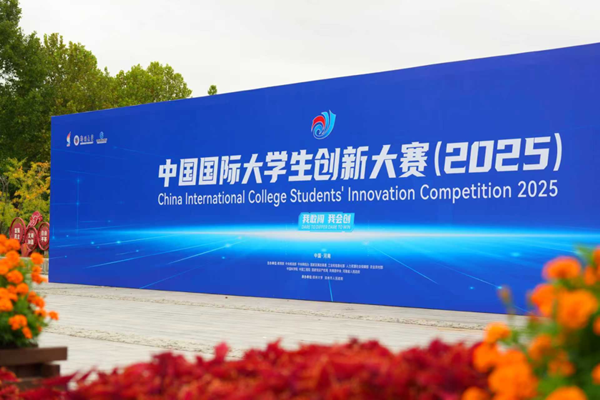
The 2025 China International College Students' Innovation Competition finals kick off at ZZU. [Photo/zzu.edu.cn]
In China, an estimated one in six couples struggles with infertility, while a birth defect occurs approximately every 30 seconds. Through over 150 days of field research involving more than 500 patients, the team identified several critical bottlenecks — existing embryo selection methods are largely subjective, invasive, and limited to analyzing chromosomal integrity alone, often missing crucial epigenetic and RNA-level information.
To overcome this, the team proposed an innovative approach to extract comprehensive genetic, epigenetic, and gene expression data from a single, tiny sample of no more than 10 embryonic cells — a significant technical undertaking, made all the more challenging because there was little prior research to guide them.
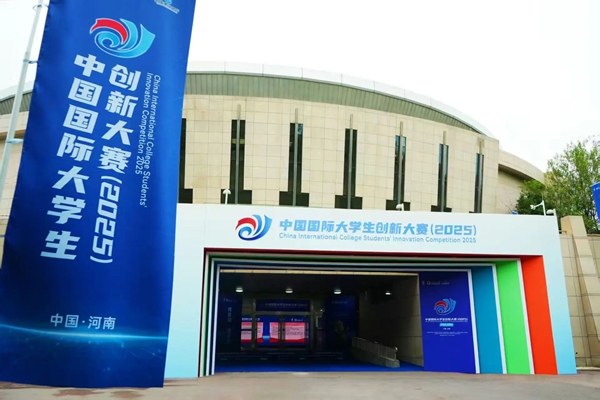
The competition venue at ZZU. [Photo/zzu.edu.cn]
For three years, the team painstakingly optimized every parameter, from lysis time to enzyme concentration. Their persistence paid off, resulting in a working prototype that can simultaneously assess chromosomal ploidy, chromatin activity, and implantation-related gene expression from one minimal biopsy.
The project was more than a competition entry — it's a commendable effort to make advanced reproductive care more precise, less invasive, and more accessible. The team will continue to refine its technology, hoping to bring new hope to families longing for a healthy child.

A student team from ZZU wins a gold medal at the 2025 China International College Students' Innovation Competition. [Photo/zzu.edu.cn]