


The Biotherapy Center at the First Affiliated Hospital of Zhengzhou University has reported new progress in tumor immunoregulation and cell therapy, with four studies published in leading international journals. The research examines how macrophage metabolism, tumor matrices, T-cell memory formation, and tumor-intrinsic immunity shape anti-tumor responses.
In a study published in Advanced Science and selected as a cover article, the team showed that TREM2 drives cholesterol efflux in tumor-associated macrophages, limiting CD4+ T-cell and NK-cell infiltration in non-small cell lung cancer (NSCLC). Targeting TREM2 reshapes the immunosuppressive microenvironment and enhances anti-tumor immunity.
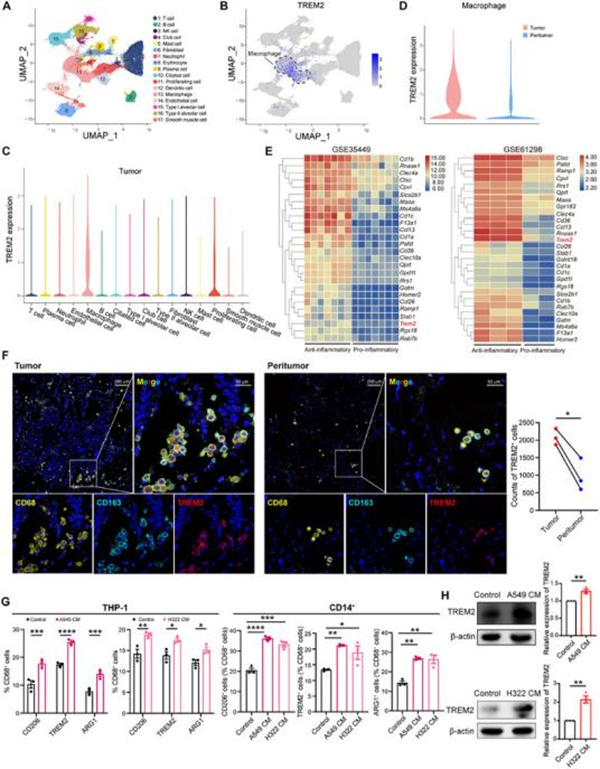
TREM2 is specifically highly expressed in anti-inflammatory macrophage. [Photo/zzu.edu.cn]
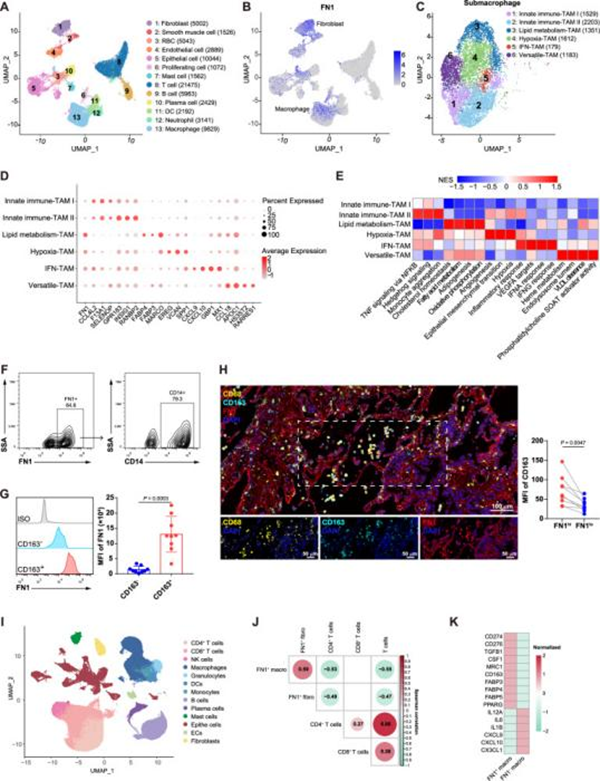
A second study published in Nature Communications revealed that macrophage-derived fibronectin stiffens tissue and suppresses anti-tumor immunity in NSCLC. Knocking out fibronectin in macrophages improved lymphocyte infiltration and boosted the efficacy of immune checkpoint blockade.
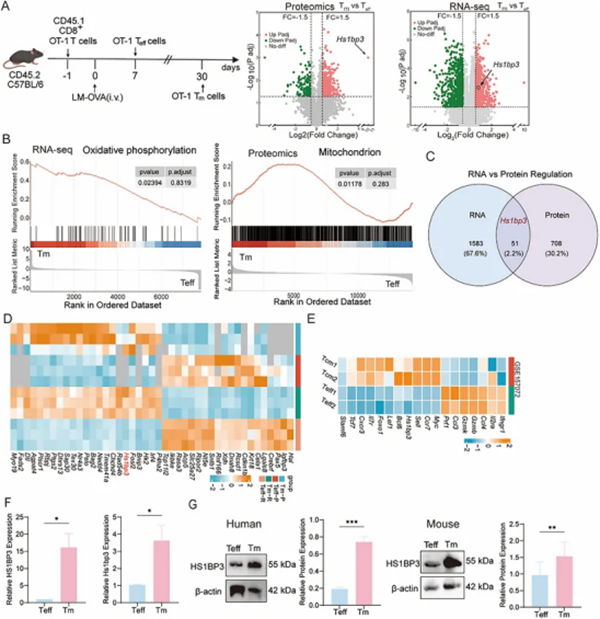
HS1BP3 is upregulated in memory CD8+ T-cells. [Photo/zzu.edu.cn]
A third Advanced Science cover study identified the HS1BP3-SIRT1-FOXO3-BCL6 axis as a regulator of memory CD8+ T-cell formation. Modulating HS1BP3 promoted memory T-cell differentiation and improved CAR-T cell persistence in solid tumors.
FN1 is enriched in tumor-associated macrophages of NSCLC. [Photo/zzu.edu.cn]
The fourth study, published in Nature Communications, identified PTPN12 as a key driver of immune evasion in MSS colorectal cancer. PTPN12 loss enhanced interferon-responsive neutrophil enrichment and CD8+ T-cell effector function, improving responses to PD-1 blockade.